User Guide
Get started with SSSH in a few steps.
Getting Started
Add a Server
Tap the + button on the home screen. Enter the hostname (e.g. 192.168.1.10 or myserver.com), port (default 22), username and password.
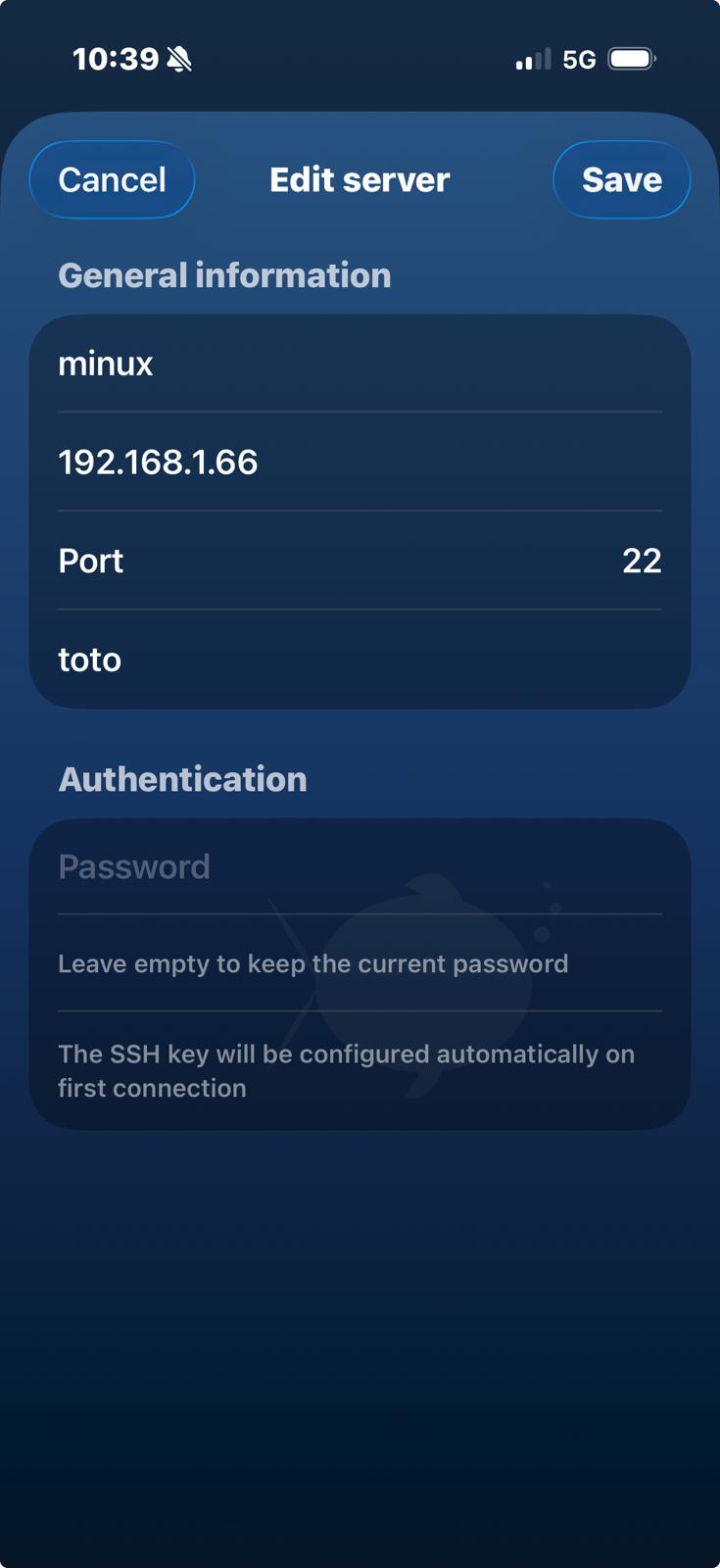 Add server form — hostname, port, username, password
Connect
Tap the server in the list. Local network servers are highlighted in cyan. SSSH checks for tmux on the server and shows existing sessions. Choose "Direct Shell" for a simple connection or tap a tmux session to attach.
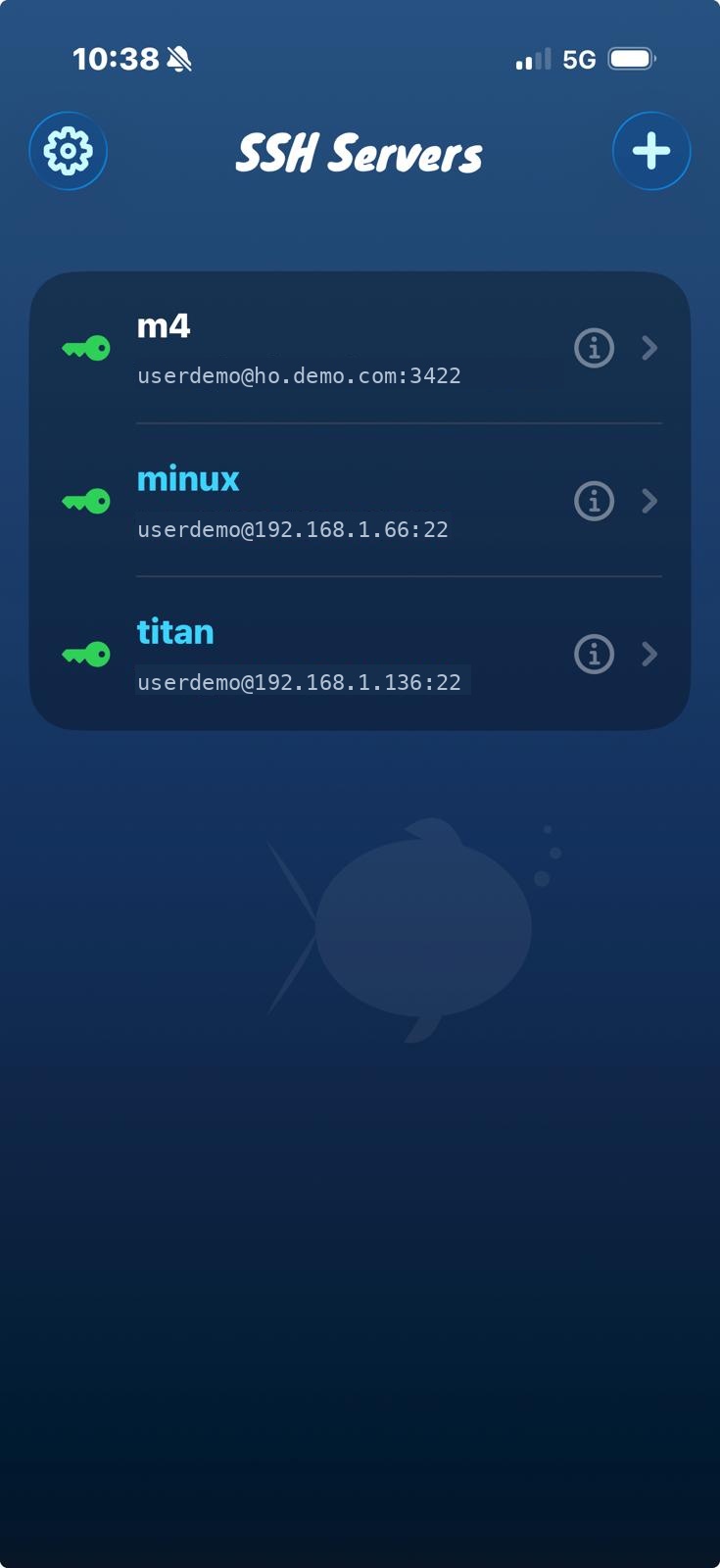 Server list
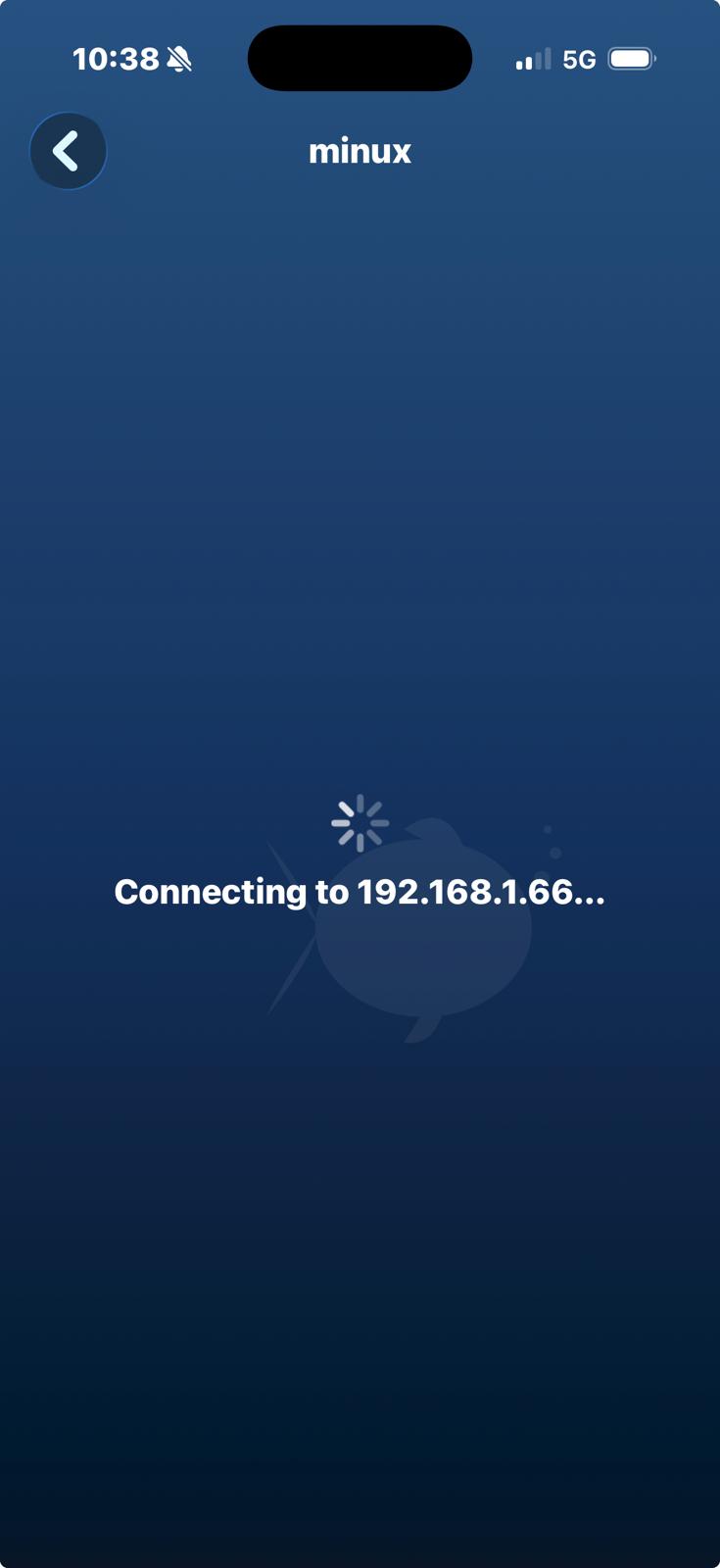 Connecting
Use the Terminal
Type commands using the iOS keyboard. The accessory bar above the keyboard provides special keys: Ctrl, Alt, Tab, Esc, arrows, Copy/Paste, |, and more. Tap F# to access function keys (F1–F12) and navigation keys (Home, End, PgUp, PgDn).
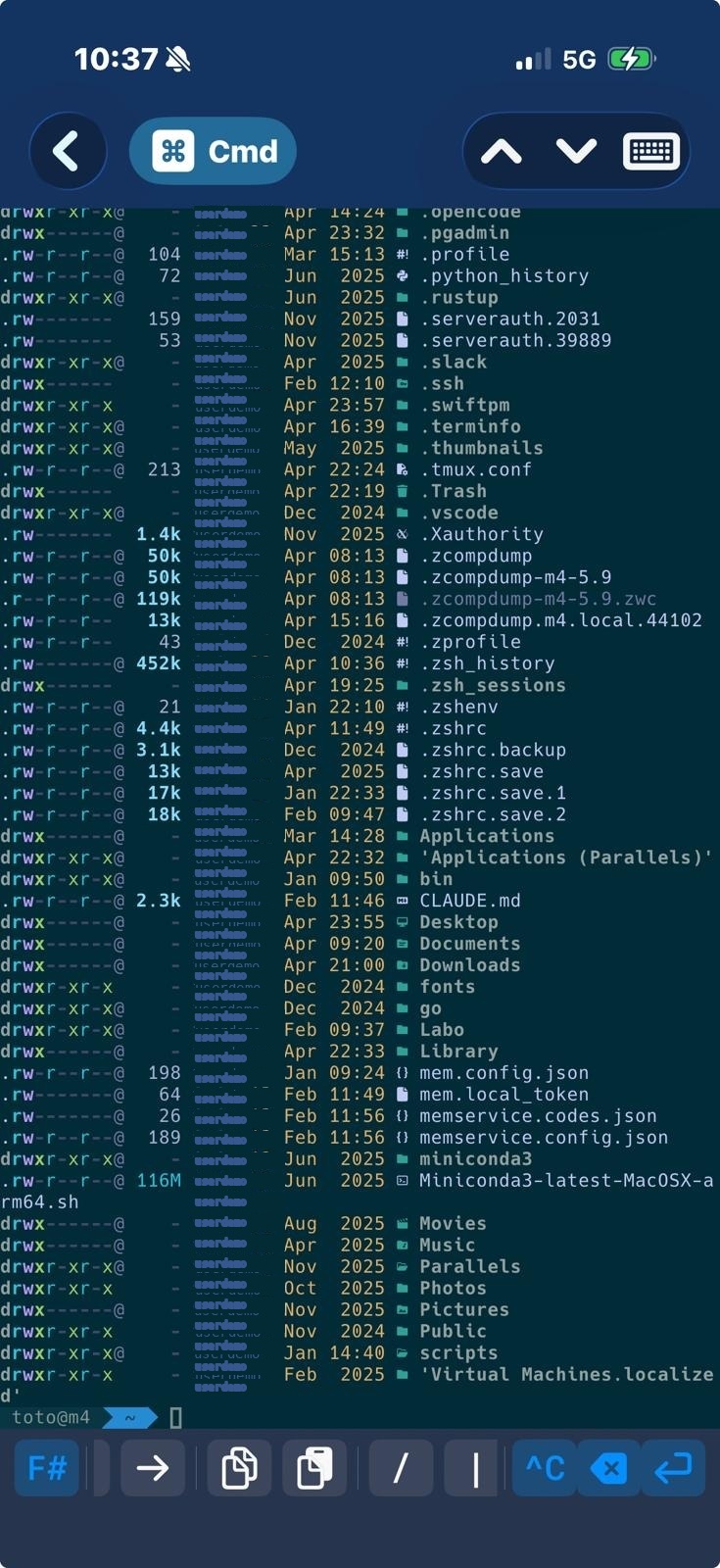 Connected terminal with accessory bar
Tip: On first password login, SSSH generates an Ed25519 key pair and deploys it to your server. Next time you connect, authentication is automatic.
tmux Sessions
tmux lets you run persistent terminal sessions that survive disconnections. When you tap a server:
- Existing sessions are listed with their name, window count and attachment status.
- Tap a session to attach to it.
- Tap
+to create a new session. - Swipe left on a session to kill it.
- Pull down to refresh the session list.
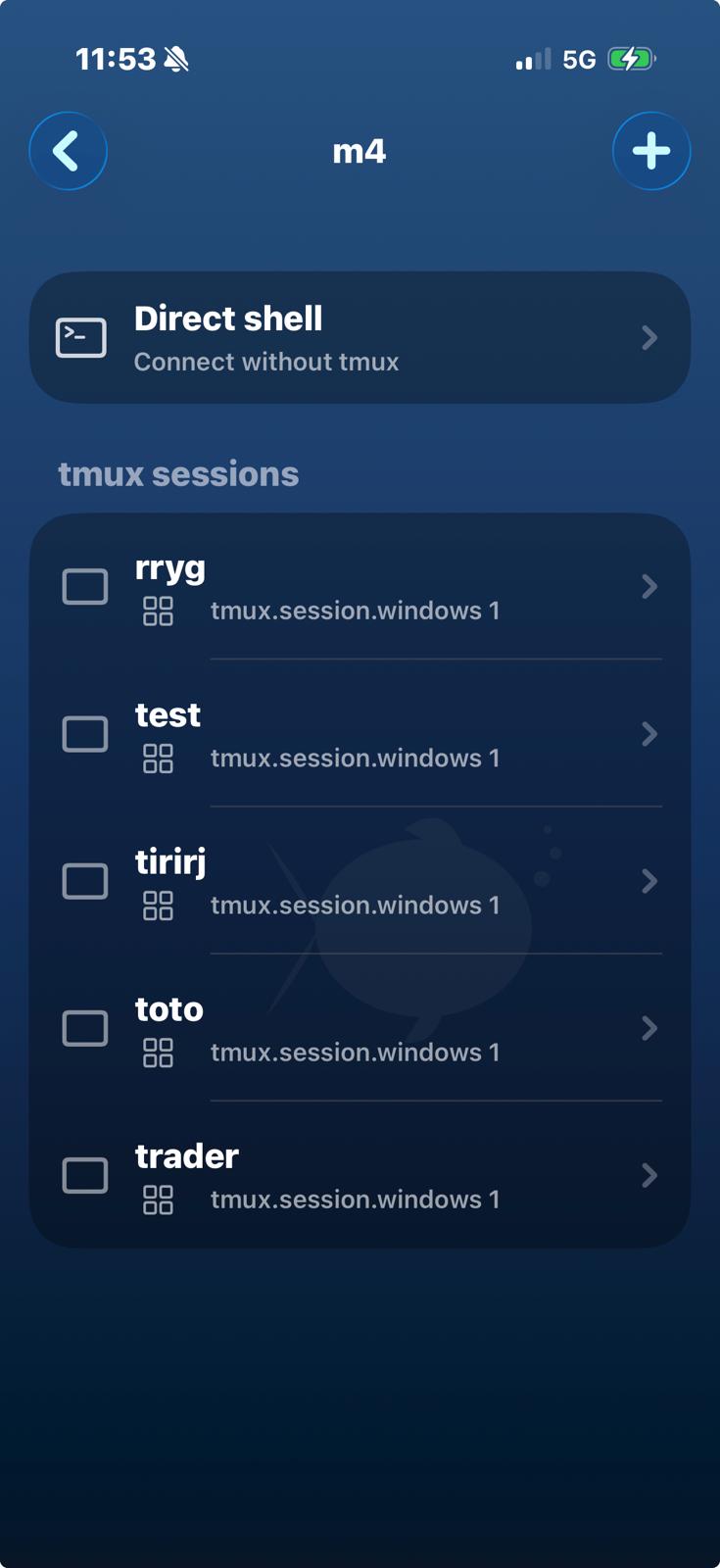 Existing tmux sessions on the server
Note: tmux must be installed on the remote server. If it's not, SSSH shows "tmux not installed" and you can still use Direct Shell.
Quick Commands
The Cmd button in the terminal toolbar opens a list of pre-defined commands you can fire with one tap. Useful for recurring tasks (logs, deploys, restarts).
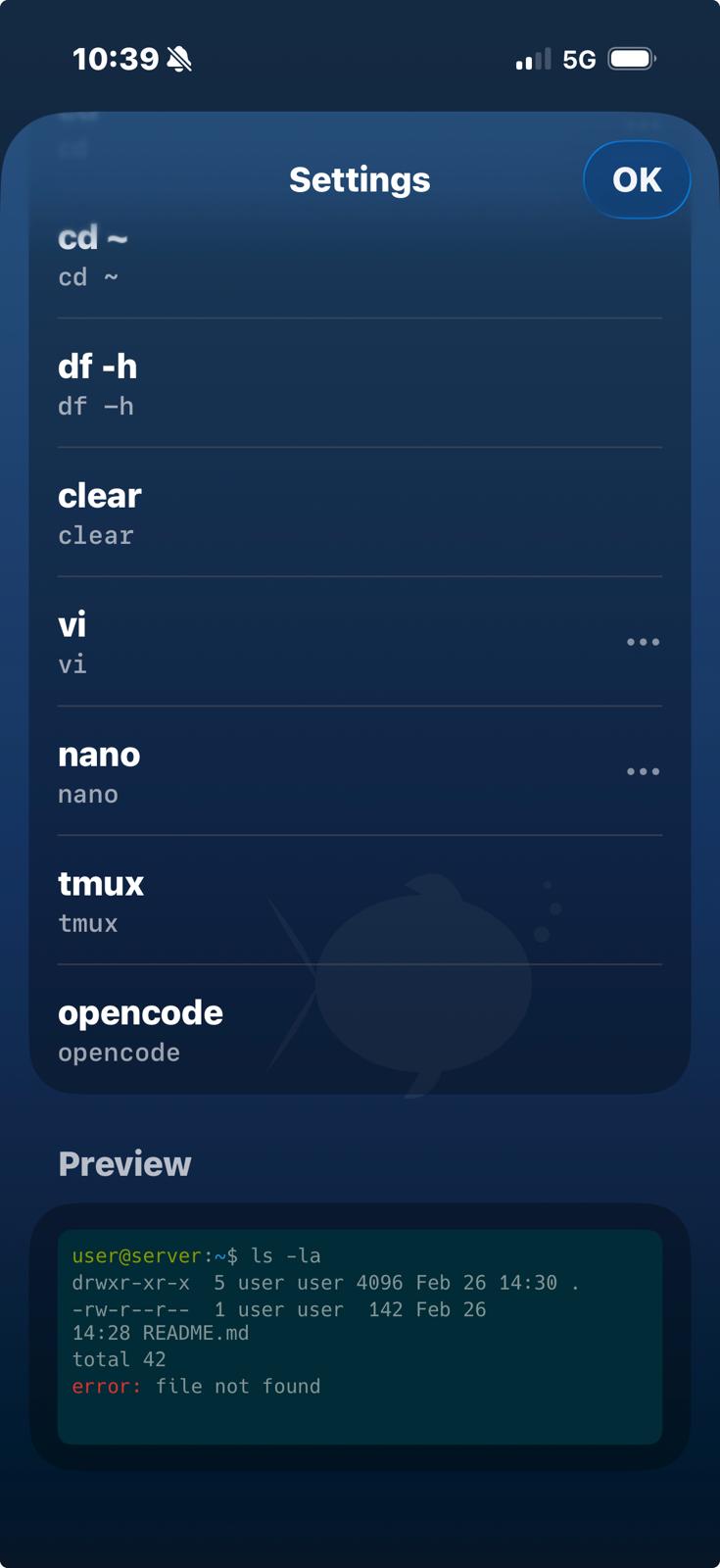 Pick a command
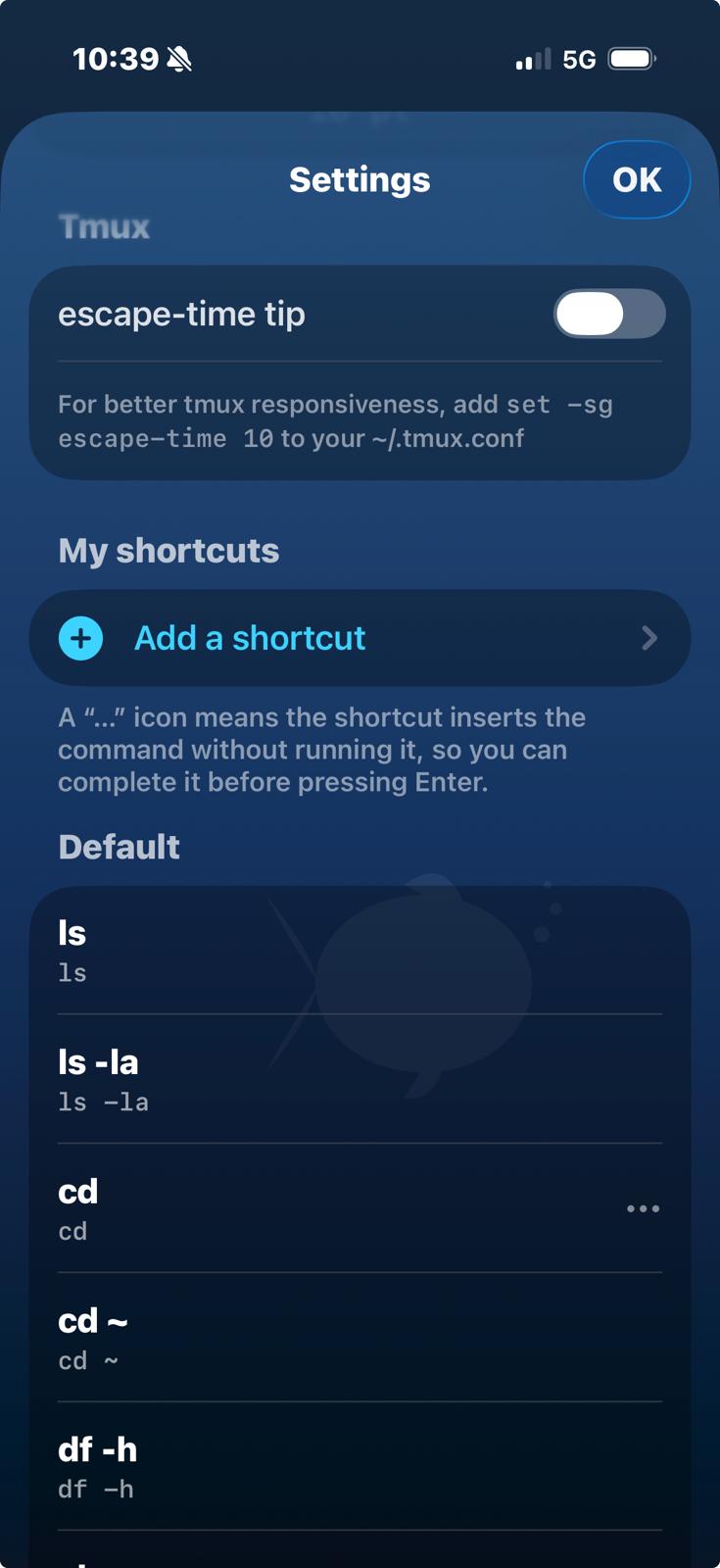 Add a custom command
- Default commands ship with the app (
ls,ls -la,cd,cd ~…) - Add your own from Settings → Commands.
- Toggle Execute immediately to send
\rat the end — off if you want to edit before running.
Terminal Settings
Tap the gear icon to access settings:
- Theme — choose from 8 themes (Pro, Dracula, Solarized Dark/Light, Material, Ocean, Nord, Tango Dark).
- Font size — adjust from 10pt to 24pt.
- Font — Hack Nerd Font Mono with full glyph support (powerline, icons).
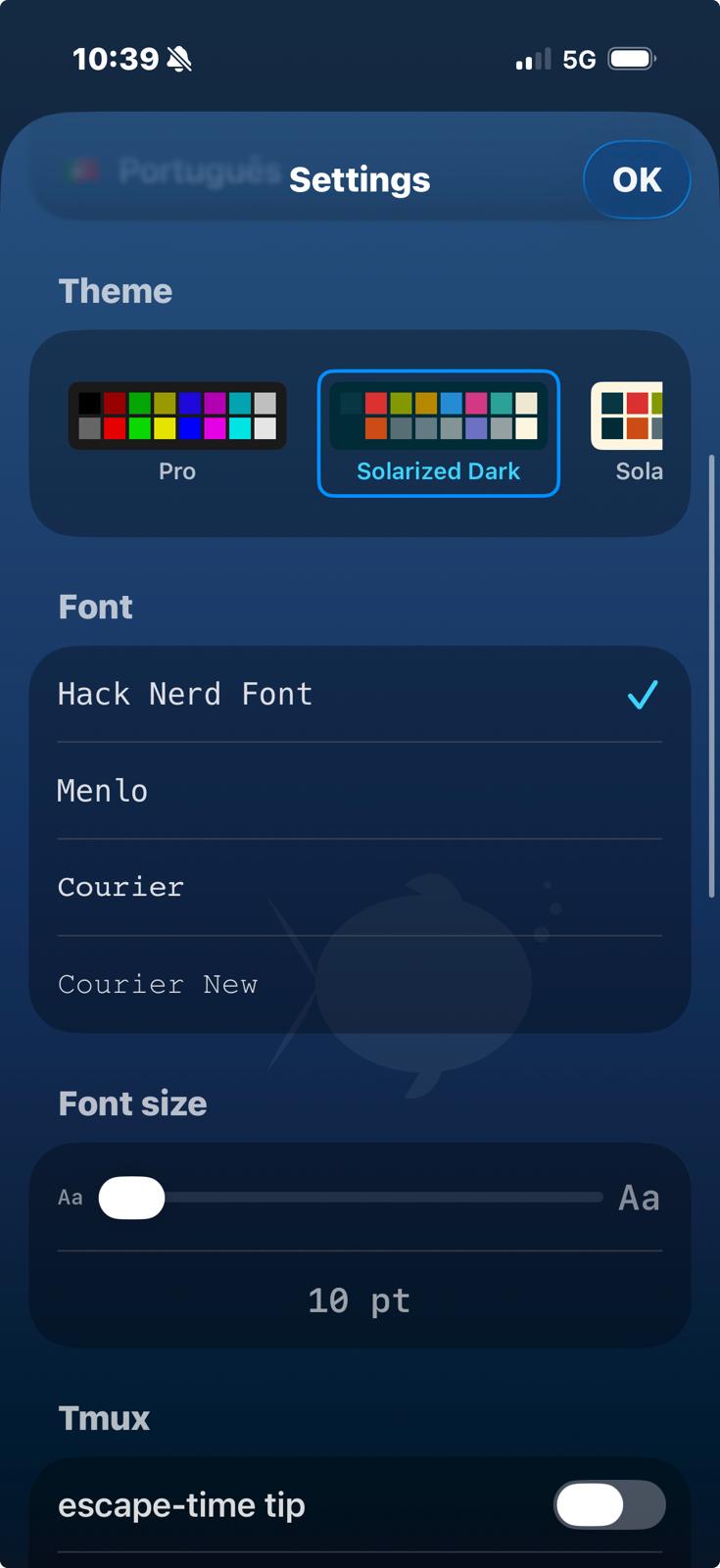 Theme picker in Settings
iPad Mode
On iPad, SSSH uses a split layout: the server list stays in the sidebar while the terminal occupies the main area. Same features as iPhone, more screen real estate.
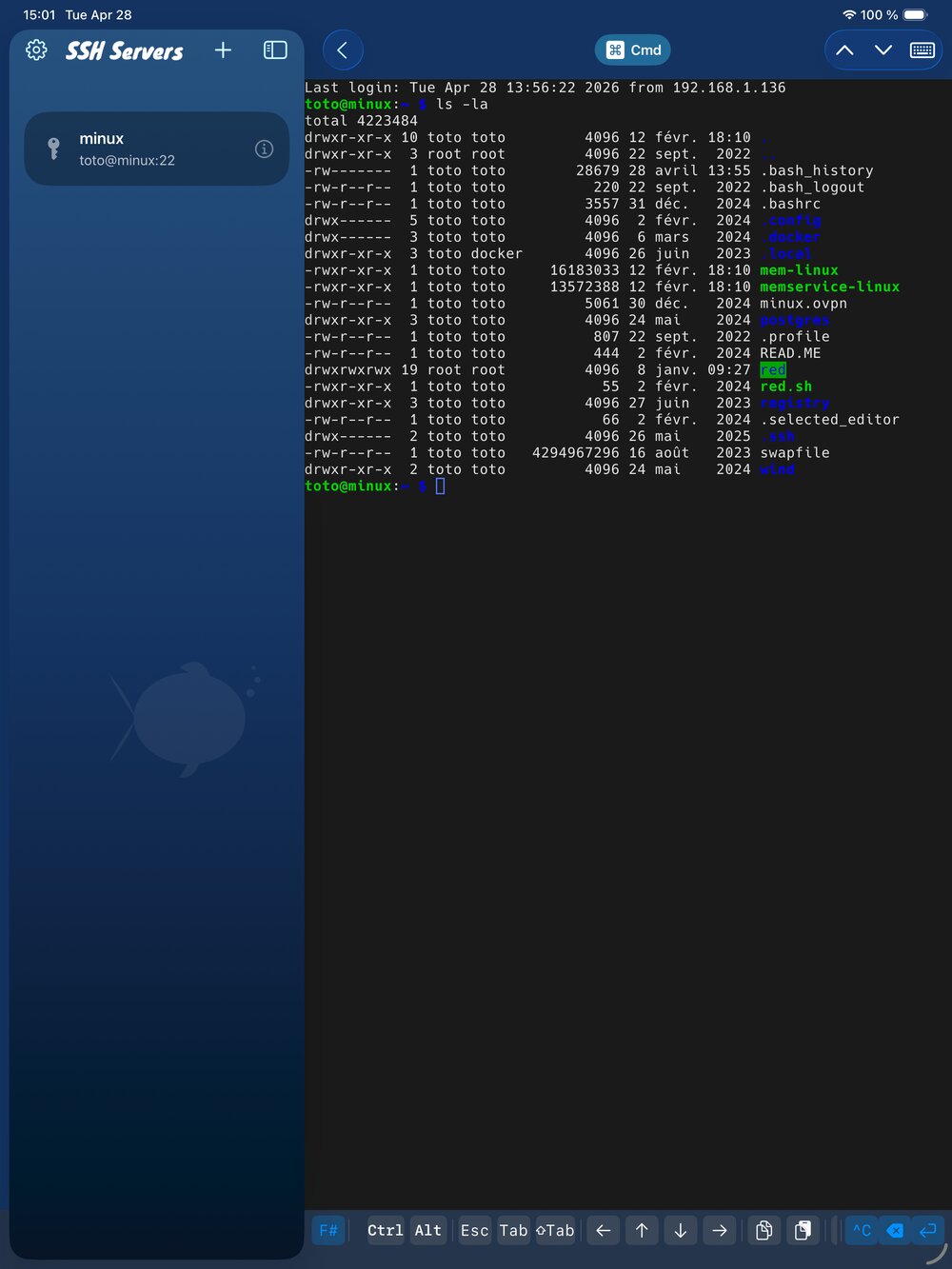 iPad split view: server list + terminal
Combined with tmux, the iPad becomes a real workstation: attach to long-running sessions, AI coding agents (like opencode), build pipelines — everything keeps running on the server, you just reconnect when you want.
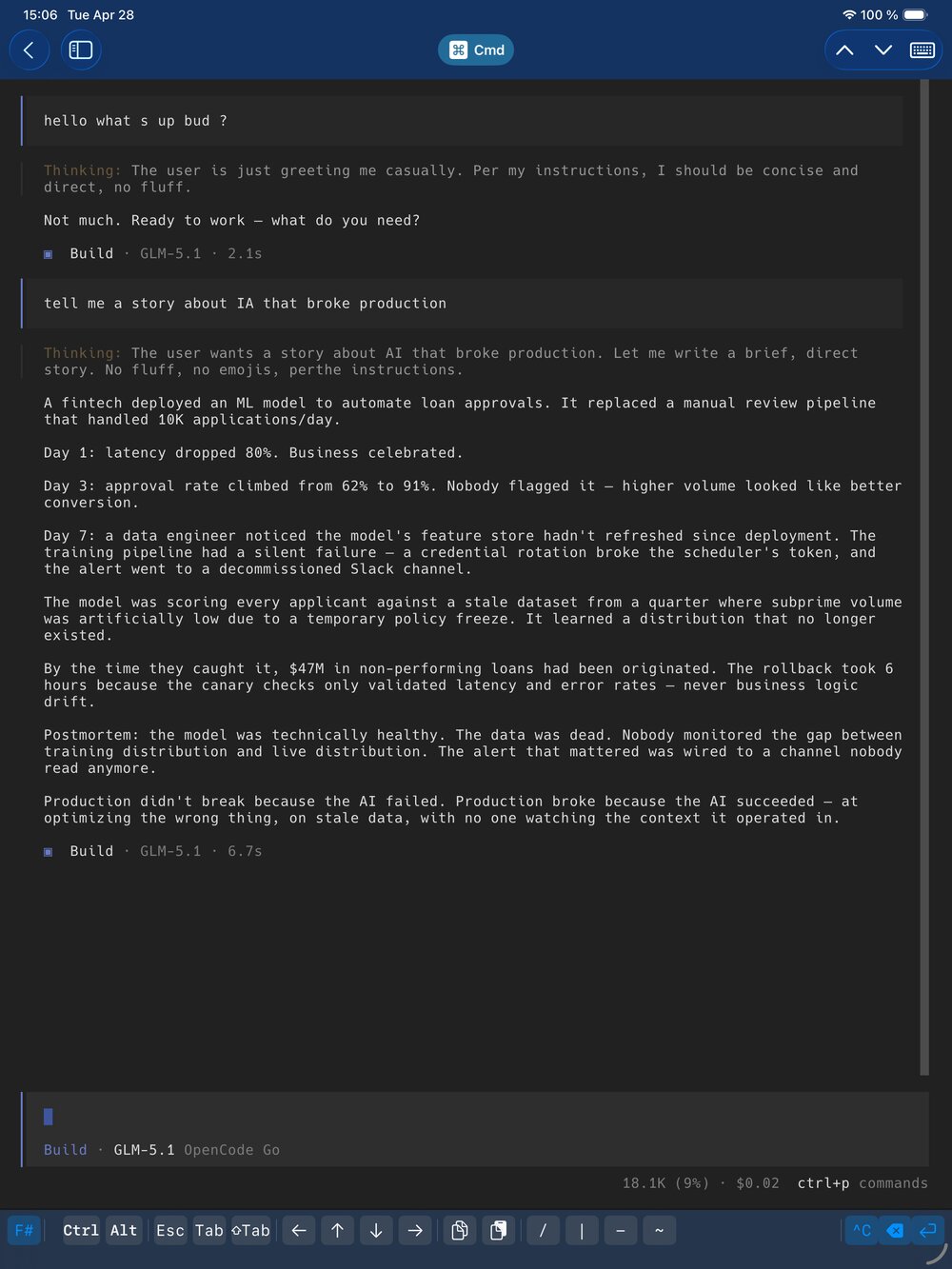 Running
 opencode (AI coding agent) over SSH from iPadSecurity
- Keychain — passwords and SSH private keys are stored in the iOS Keychain, encrypted by the OS.
- TOFU — server fingerprints are verified on every connection. A warning is shown if the fingerprint changes.
- Ed25519 — keys are generated per-server and auto-deployed. No manual key management needed.
Keyboard & Accessory Bar
The accessory bar above the keyboard has two modes. Tap F# / abc to switch between them.
Main bar
Ctrl— tap once for a single Ctrl combo, double-tap to lock. Type a letter to send Ctrl+letter (Ctrl+C, Ctrl+Z, etc.)Alt— same toggle behavior, sends Alt+key (useful for tmux prefix, readline shortcuts)Esc— escape keyTab/⇧Tab— autocomplete / reverse autocomplete← ↑ ↓ →— arrow keys (combine with Ctrl for word navigation, with Alt for alt-arrow)- Copy / Paste — copy the terminal selection to the iOS clipboard, or paste clipboard content into the terminal. Handy for transferring API keys, tokens or URLs from Safari.
/|-~— commonly used special characters^C— interrupt (SIGINT)⌫— clear input line (Ctrl+U)
Extended bar (F#)
F1–F12— function keysHome/End— jump to start/end of linePgUp/PgDn— scroll or navigate in pagers